Precision
From The Start
The Blueprint of Innovation
Mechanical design is where abstract ideas transform into tangible reality. It is the art and science of balancing form, function, and physics to solve complex, real-world problems.
Every everyday objects, from the precision gears in a wristwatch to the massive turbines powering Ireland, begins as a concept on a screen or a drafting table.
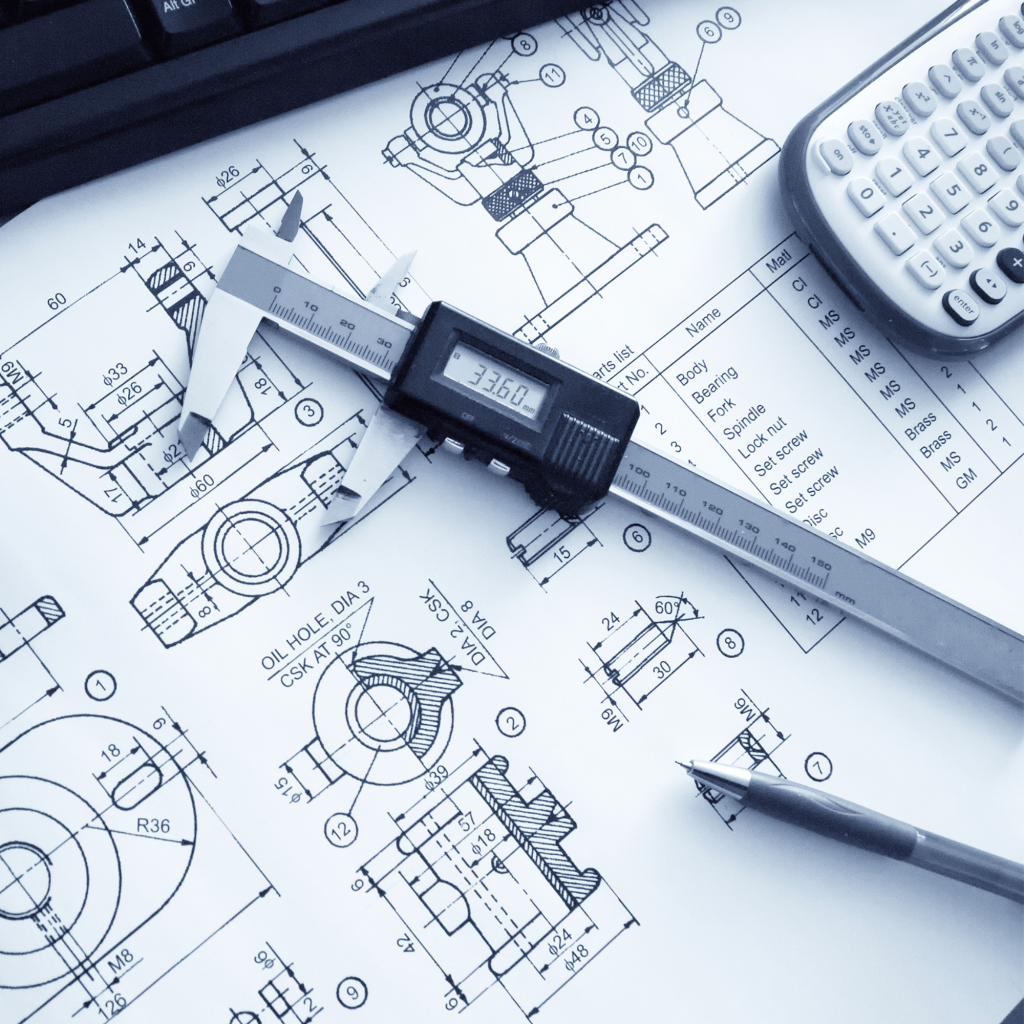
As seen in the image, the discipline relies heavily on exact measurements, strict geometry, and meticulous specifications to ensure safety and efficiency.
“Scientists study the world as it is; engineers create the world that has never been.”
Theodore von Kármán
The Art of Balancing Form, Fit, and Function: What is Mechanical Design?
Ever looked at a sleek smartphone, the smooth movement of a car’s glovebox, or the massive, synchronized arms of a factory robot and wondered, “How did someone actually figure that out?” The answer is mechanical design.
It’s the invisible bridge between a wild idea and a physical reality. It’s equal parts mathematics, material science, and sheer creative problem-solving. Whether you are an aspiring engineer or just curious about how the physical world is built, here is a look behind the curtain of mechanical design.
At its core, mechanical design is governed by three strict masters. If a design fails at any one of these, it’s back to the drawing board.
Function: Does it actually do what it’s supposed to do? Can it handle the structural loads, thermal stresses, and repetitions without breaking?
Form: What does it look like, and how does it feel? This is where engineering meets industrial design. It’s about aesthetics, ergonomics, and spatial constraints.
Fit: How do the parts interact with each other? This involves tolerances—the acceptable limits of variation in dimensions. If the fit is too loose, the product feels cheap or leaks. If it’s too tight, it won’t assemble.
 Premier Mechanical Design